Dear Ash Mount Community,
What an amazing week it has been.
I have spent quite a bit of time on the building site this week and every visit seems to bring another exciting development. It is incredible to see the school continuing to come to life. Spaces that existed only on plans and drawings a year ago are now becoming real learning environments where our children will learn, grow, and thrive.
One of the most exciting aspects of this stage is beginning to see how the spaces will support the educational philosophy that sits behind Ash Mount. The amphitheatre, collaborative learning spaces, specialist rooms, exhibition areas, and outdoor learning environments are all beginning to feel real. Every time I visit, I find myself imagining children using these spaces to ask questions, solve problems, perform, debate, create, and share their learning. These spaces have been intentionally designed to support inquiry, collaboration, creativity and meaningful dialogue, all of which sit at the heart of the Ash Mount learning experience.
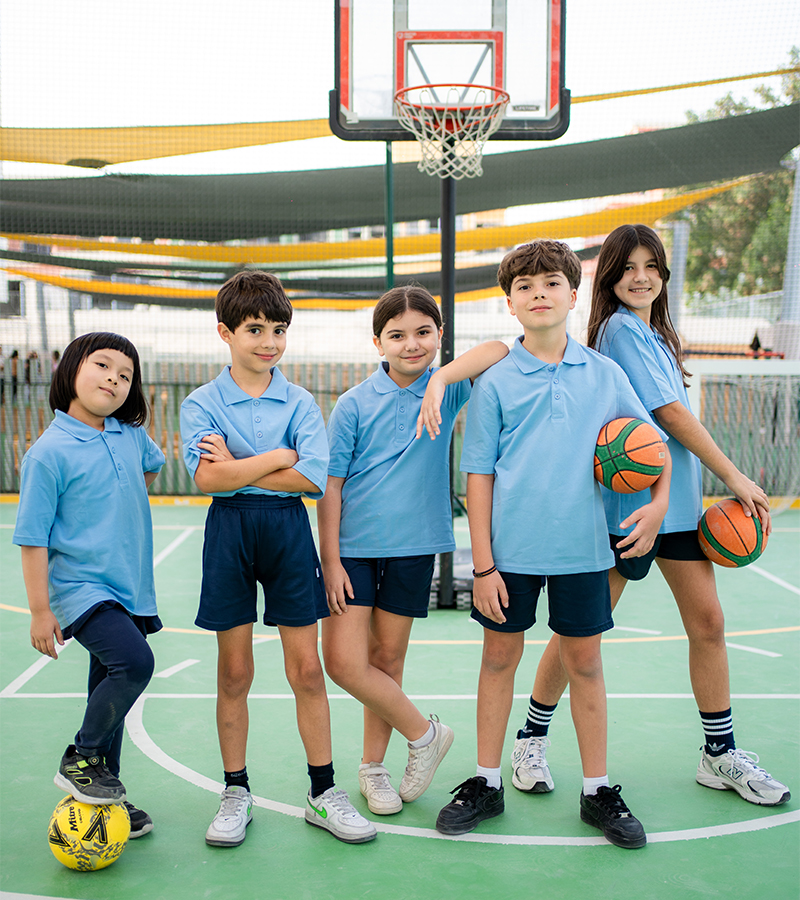
Last weekend was also a wonderful opportunity to spend time with our growing community. Thank you to all the families who attended our Community Sports Event. It was lovely to see children and parents connecting, building friendships, and enjoying being together outside of a traditional school environment.
We were equally delighted to welcome our partners from Brooklyn Melodies and meet some of the individual music teachers who will be working with our students. Music plays an important role in a balanced education. It develops confidence, discipline, creativity, collaboration, and self-expression. We are excited about the opportunities that will be available to our students both during and beyond the school day.
This month our blog focus is Local Heart, Global Mind.
At Ash Mount, we believe children should develop a deep appreciation for the country and community they call home whilst also developing curiosity and understanding about the wider world.
Being internationally minded starts locally.
Children first learn to understand themselves, their family, their community, and the country they live in. From this secure foundation, they become increasingly able to understand different perspectives, cultures, experiences, and ways of thinking.
This philosophy sits at the heart of both our school vision and the IB philosophy. We want children to:
learn with purpose by understanding how their learning connects to the world around them
live with compassion by appreciating different perspectives and experiences
lead with courage by engaging thoughtfully with new ideas and unfamiliar situations
One area that particularly excites me within our Local Heart, Global Mind philosophy is helping children learn how to think deeply about important questions.
Many families may have heard of Philosophy for Children (P4C). This approach encourages children to explore ideas, consider different viewpoints, ask thoughtful questions, and learn how to respectfully disagree. It aligns beautifully with the aspirations of both the UAE and the IB to develop thoughtful, reflective, respectful young people who can contribute positively to society.
It is not about discussing controversial topics or telling children what to think. Rather, it is about teaching children how to think, how to listen, how to justify their ideas, and how to engage respectfully with others.
I was reminded of this recently when I was delivering a talk on Parenting in 2026. During the session, a parent asked a question that immediately caught everyone’s attention:
“Should I be worried that my two year old daughter has started lying?”
What a fantastic question.
Many parents are surprised when their child tells their first untruth. It can feel uncomfortable because, as adults, we immediately associate lying with dishonesty. However, from a developmental perspective, the picture is often very different.
In fact, the ability to tell a lie is often considered an important developmental milestone.
Before a child can deliberately tell a lie, they need to understand that other people have thoughts, beliefs, and knowledge that may be different from their own. Developmental psychologists refer to this as Theory of Mind, and it typically begins to emerge between the ages of two and five.
Put simply, a child who says, “I didn’t eat the biscuit,” while crumbs are still around their mouth has demonstrated something quite remarkable. They have realised that another person has a separate perspective and that it might be possible to influence what that person thinks.
This does not mean we celebrate lying. Rather, it means we understand what it tells us about a child’s developing brain.
The goal is not to punish the developmental milestone; it is to help children learn how to use these growing skills responsibly.
Questions like these fascinate me because they remind us that children are often doing far more thinking than we realise. They encourage us to move beyond simple answers and think more deeply about development, behaviour, learning, and human relationships.
In many ways, this is exactly what inquiry and international education seek to develop. Rather than simply asking “What happened?” we also ask “Why might this have happened?” and “What can we learn from it?”
In fact, I am already planning one of my clubs for next year and, unsurprisingly, it will be a Philosophy and Thinking Club. I have already started collecting provocations and discussion starters that I know our students will enjoy exploring.
Questions such as:
What makes a good friend?
Can something be fair but not equal?
Is it ever right to break a rule?
What makes a community strong?
Why do people see the same situation differently?
These discussions help children develop confidence in their thinking whilst learning to appreciate the perspectives of others.
Families can support this at home by:
encouraging children to ask questions
discussing current events in age appropriate ways
asking open ended questions with no single correct answer
encouraging children to explain their thinking
modelling respectful disagreement and discussion
Some of the best conversations happen around the dinner table, in the car, or whilst walking together.
These moments help children develop curiosity, empathy, and confidence; skills that support our vision to learn with purpose, live with compassion, and lead with courage.
Finally, a reminder about our Choir in an Hour Community Event this Friday. We are really looking forward to bringing families together once again and sharing another fun community experience. Events like these continue to remind us that Ash Mount is already becoming much more than a school building; it is becoming a community.
We hope to see many of you there.
Warm wishes,
Abigail Fishbourne
Founding Principal
Ash Mount School


